Temperature guide
Chicken breast temperature and thin-piece placement
Chicken breast reaches the USDA home-cooking minimum at 165°F (74°C) internally. The center of the thickest portion is the target.
U.S. home food-safety guidance.Check the source and scope
Check a chicken temperature reading
This interactive checker needs JavaScript. The poultry minimum is 165°F (74°C). Read the measurement guide below.
Waiting for a reading
Your result will show here.
The checker compares your reading with 165°F (74°C). It doesn't estimate cooking time.
Temperature is only one part of safe food handling. Follow the latest guidance from USDA and FoodSafety.gov.
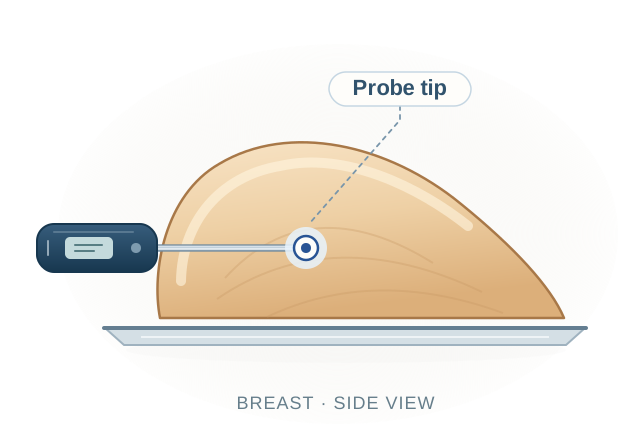
Where to measure: Breast
- Measure the thickest part of the breast.
- For a thin breast, insert from the side so the sensing area reaches the center.
- Keep the sensing area away from bone and the pan.
What to do
- Thick breast: place the sensing area in the center of the thickest portion without pushing through the other side.
- Thin fillet: insert from the side so the sensing area reaches the center.
- Bone-in breast: aim into the thickest meat, keeping the sensing area clear of bone and the pan.
- Follow the manufacturer instructions for the sensing area and a stable reading; there is no single insertion depth for every probe.
- Check pieces of different sizes separately rather than treating the first reading as the whole batch.
Minimum temperature and texture
The U.S. home-cooking minimum is 165°F (74°C), measured with a food thermometer. Texture preferences do not change that minimum. FoodSafety.gov minimum temperatures.
This checker does not calculate low-temperature holding times. Resting does not replace reaching the minimum; continue cooking and recheck a reading below it.
One reading does not assess every piece or the handling of the whole meal. Check pieces of different sizes separately. The checker cannot assess storage history or cross-contamination.
Conditions and limits
- Keep the tip off the pan and any bone.
- Resting may change a reading, but this guide does not substitute a lower pull temperature for the 165°F home-cooking minimum.
Source and scope
Primary reference: USDA FSIS Food Thermometers. Equipment-specific steps and quality suggestions are practical guidance; check the appliance or product instructions for your model. How this site uses sources.