Chicken wing temperature: 165°F and where to check
Chicken wing temperature needs to reach 165°F (74°C) in the thickest meat. Measure away from bone, then check your reading.
Check a wing readingIndependent guide. Food-safety review pending. Sources and limits
The chicken wing temp minimum comes from FoodSafety.gov’s poultry chart. It is an internal meat temperature, not an oven setting or an oil temperature.
Where to put a thermometer in chicken wings
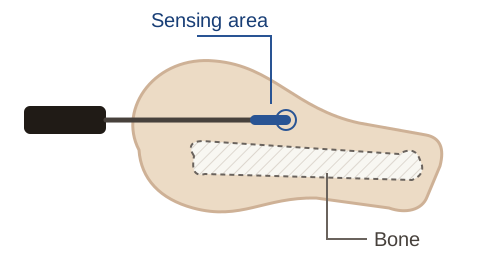
Put the sensing area in the thickest meat, clear of the bones. For thin pieces, enter from the side. These placement notes describe separate wing pieces, not the wing joint on a whole bird.
Drumettes
Flats
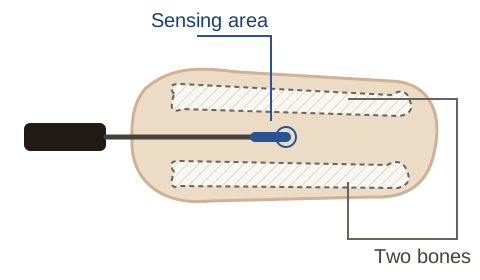
If the flat is too thin for your probe, a reading from a larger piece does not confirm that flat’s temperature; use a thermometer suited to thin food.
Schematic, not to scale. The blue band marks an illustrative sensing area, not a fixed insertion depth or a doneness indicator.
Follow your thermometer maker’s insertion-depth and reading instructions. The placement guide explains sensing areas and side entry.
How to check chicken wing temperature
Check each wing piece with a food thermometer. Start with the thickest pieces, but do not use one piece’s result to clear the batch.
- Find the thickest meat on the drumette or flat.
- Position the probe clear of bone and the cooking surface.
- Wait for the reading as directed by the thermometer maker.
- If the reading is below 165°F (74°C), continue cooking and recheck.
A tray can contain small flats and larger drumettes. Check them separately instead of assuming crisp skin means the centers have reached the same temperature. For basket-specific placement, see the air-fryer temperature check.
Internal temp of chicken wings: read the checker result
The checker compares a reading you enter with the site’s published minimum. It does not measure the food itself.
Choose Wing and °F, enter a reading, then select Check reading. These are actual checker outputs, not measurements from a cooked batch:
- 164.9°F
- Not there yetContinue cooking and recheck with a food thermometer.
- 165°F
- Meets the minimumCheck every piece, especially the thickest ones.
For chicken wings internal temp in Fahrenheit, the checker uses 165°F. In Celsius mode, it uses 74°C. Switching units clears the input rather than converting it. Check a reading at the temperature checker.
Chicken wing temperature FAQ
What is chicken wing temperature when done?
The U.S. home-cooking minimum is 165°F (74°C), measured inside the thickest meat. A recipe’s preferred texture is a separate question; this page does not set a higher cooking target.
What is the internal temp of chicken wings in Celsius?
Use 74°C for the site’s Celsius check. Select °C first, then enter the Celsius reading displayed by your thermometer; do not type a Fahrenheit reading into Celsius mode.
What is the internal temp of chicken wings in Fahrenheit?
The minimum is 165°F in the thickest meat, measured clear of bone. Select °F in the checker and enter your thermometer reading.
How can I tell if chicken wings are done without a thermometer?
You cannot verify the internal minimum from skin color, clear juices, or firmness. Use a food thermometer. The pink-chicken check explains why appearance alone cannot settle the question.
Are chicken wings done at 165°F or 175°F?
The home-cooking minimum remains 165°F (74°C). Higher temperatures discussed in cooking guides concern texture, not a replacement for the minimum or for correct probe placement. The checker does not recommend a texture endpoint.
What if the probe touches a wing bone?
Reposition it in the meat and take a new reading. A number taken against bone is not the meat reading this check needs.
Sources and limits
The minimum comes from FoodSafety.gov’s temperature chart. Probe placement and checking each piece follow USDA FSIS Food Thermometers.
Drumette and flat instructions are practical placement guidance. Check the appliance or product instructions for your model. This page does not calculate cooking time, low-temperature holding time, or safe storage history. Reaching a temperature does not verify earlier handling.
Chicken Temp Guide is independent, not an official USDA tool. See how this site uses sources.